
If you’ve been running Meta Ads for a few years, you’ve probably had this thought recently: “Why does this feel harder than it used to?”
CPMs are higher. Q1 2025 saw Meta’s highest first-quarter CPMs since at least 2021, with costs jumping 19.2% year-over-year. Targeting feels limited. Campaigns that worked in the past suddenly stop performing. And every update seems to take more control away from advertisers.
So naturally, many businesses start saying Meta Ads don’t work anymore.
But that’s not entirely true.
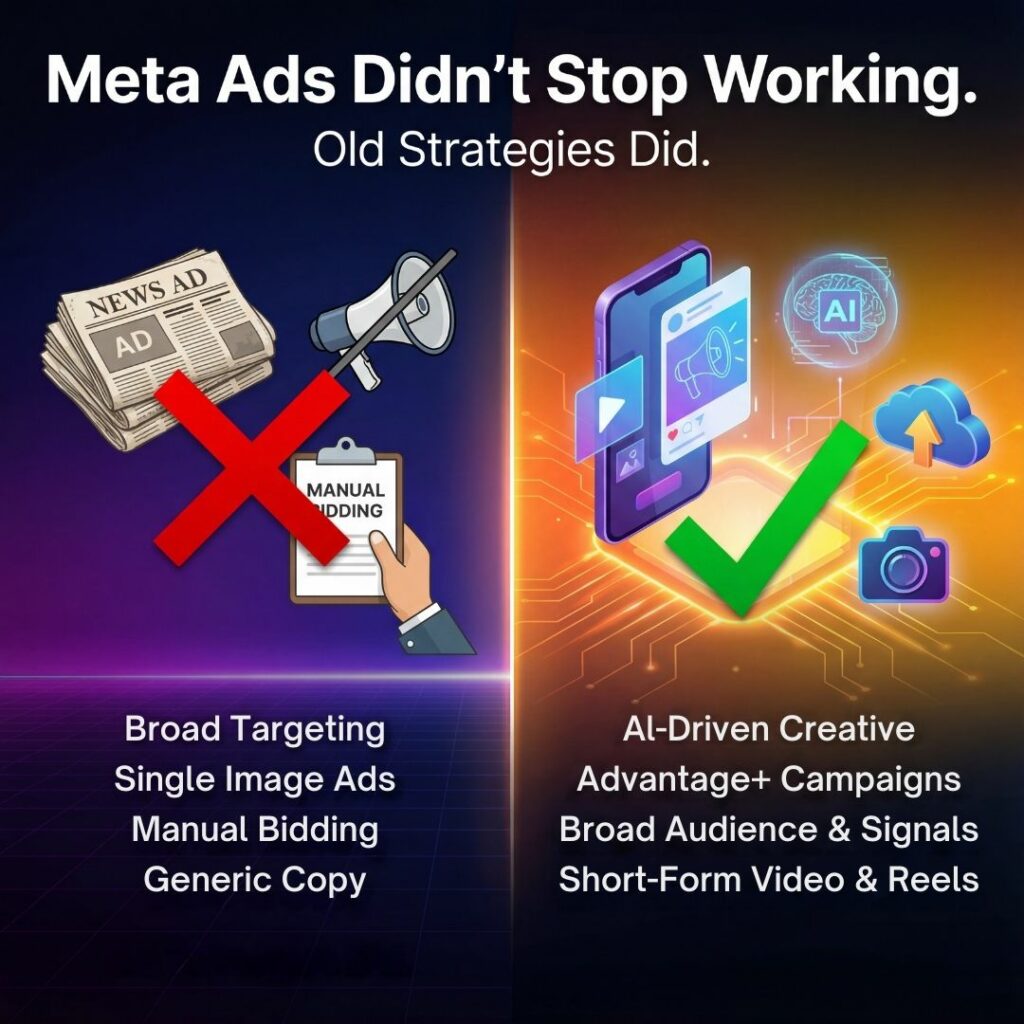
Meta Ads still work. But only if you understand how the platform has changed and how Meta wants you to advertise in 2026.
If you’ve been feeling lost lately, we’re here to help! Let’s jump into what the DTS team has learned over the past year. It might just turn your campaigns around.
What Changed in Meta Ads Leading Into 2026
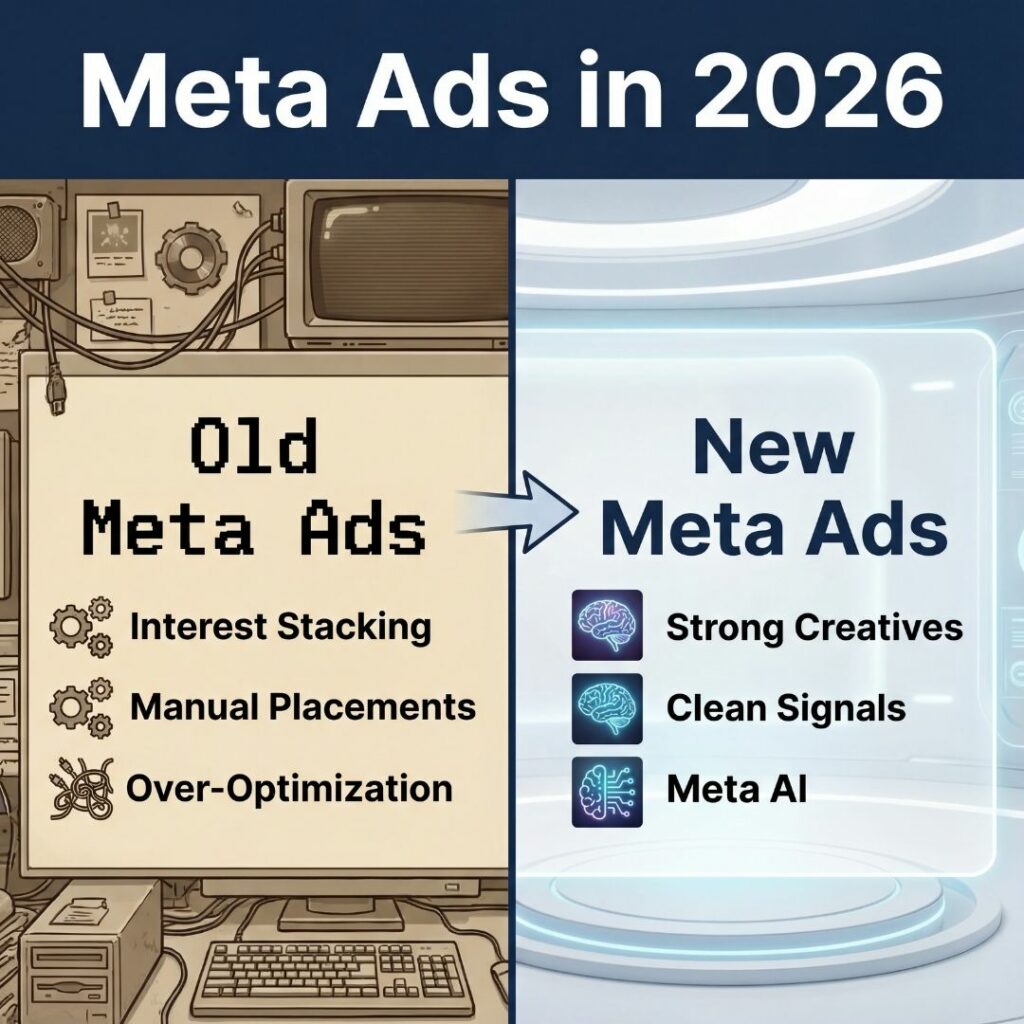
Meta has fully transitioned from a manual advertising platform to an AI-driven system.
In the past, advertisers controlled interests, placements, audiences, and bidding. In 2026, Meta controls most of that. As of March 2025, Meta retired several detailed targeting exclusions and layered filters, pushing advertisers toward broader targeting and relying on creative and data signals instead.
Your role has changed. You are no longer optimizing buttons. You are feeding the system signals.
Meta’s algorithm now decides who sees your ads, where they appear, when they are shown, and how budget is allocated. Your job is to give it the right inputs.
How Meta’s AI Actually Works Now
Meta’s AI learns from creative engagement, conversion signals, user behavior across platforms, and historical account data.
It does not rely on hyper-detailed interest stacks, tiny custom audiences, or manual placement exclusions.
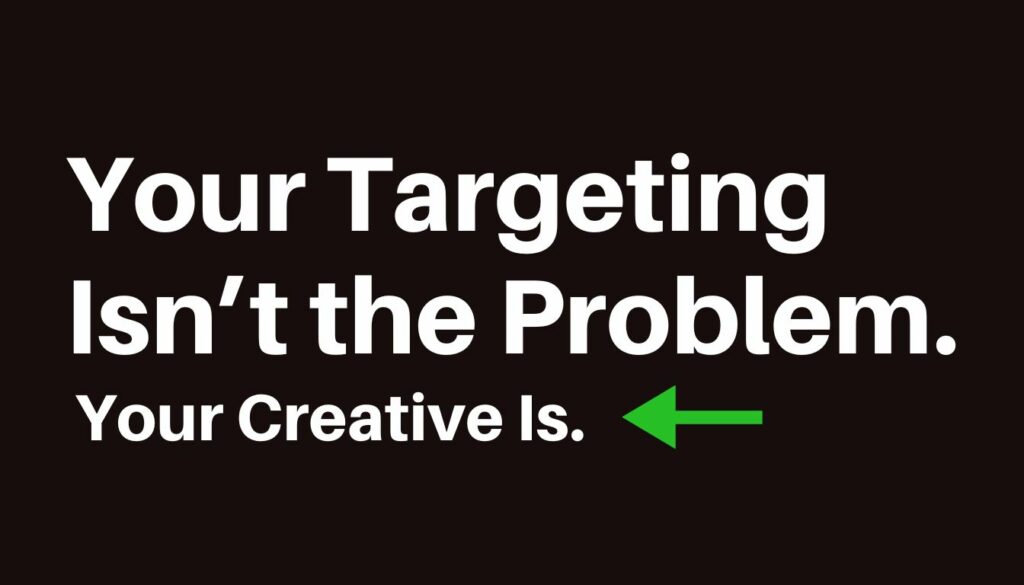
This means campaigns fail not because targeting is “worse,” but because creatives are weak, conversion tracking is broken, or messaging is unclear.
Meta Ads in 2026 are creative-led, signal-driven, and system-optimized.
What Still Works in Meta Ads
Despite all the chaos, some fundamentals haven’t changed. These are the things that separated profitable accounts from money pits in 2020, and they still do in 2026.
Clear Offers
This sounds obvious, but scroll through your feed and count how many ads actually give you a compelling reason to click. Most don’t.
Your ad needs to answer “why should I care right now?” Discounts work. Free trials work. Bundles, guarantees, limited-time bonuses, risk reversals. These are reasons to act instead of scroll.
The best-performing ads present an offer that makes inaction feel like a mistake.
Simple Messaging
Meta’s AI can find the right people, but it can’t fix confusing creative.
Ads that immediately answer three questions outperform everything else:
- Who is this for?
- What problem does it solve?
- Why does it matter?
If someone has to watch your whole video or read your entire caption to understand what you’re selling, you’ve already lost them. Clever wordplay and abstract brand messaging might win awards, but clarity wins customers.
Strong Conversion Signals
We covered this above, but it’s worth repeating: tracking is the foundation.
Meta recommends using both the Pixel and Conversions API together to get a complete view of performance. The Pixel catches browser-side activity. CAPI catches what the Pixel misses. Together, they give Meta’s AI the data it needs to actually optimize toward people who convert, not just people who click.
If your tracking is broken or incomplete, you’re essentially asking Meta to find buyers while blindfolded. Accounts with clean, redundant tracking consistently outperform those running on Pixel alone.
Consistency Over Hacks
The brands winning on Meta aren’t chasing viral moments. They’re grinding.
New creative every week. Testing hooks, formats, angles, offers. Iterating on winners instead of abandoning them. Building a library of assets that the algorithm can learn from.
This isn’t sexy, but it’s how compounding returns work in paid media. One viral ad might spike your numbers for a week. A consistent testing system builds a machine that performs month after month.
What No Longer Works (And Why)
Some tactics are officially outdated in 2026.
Interest stacking with 20+ interests rarely beats broad or Advantage+ audiences. Advantage+ Shopping Campaigns grew 70% year-over-year in Q4, and Meta reported an 8% improvement in ad quality through its Andromeda system.
Over-segmentation kills learning. Duplicating campaigns fragments data. Obsessing over CTR without conversions leads to false confidence.
Meta Ads now punish over-control. The platform rewards advertisers who trust the system, but only after giving it the right inputs.
Creatives Matter More Than Targeting
This is the biggest shift.
In 2026, creatives are your targeting.
A 2025 AppsFlyer report found that 70-80% of Meta ad performance stems from creative quality, not budget or targeting. Meta’s AI uses engagement patterns to decide who sees your ad. If the creative resonates with a certain type of user, Meta will find more of them automatically.
What works best:
- UGC-style videos
- Native, lo-fi content
- Clear hooks in the first 2 seconds
- Real people, real language
- Short-form video under 30 seconds
UGC-based ads achieve 4x higher click-through rates and a 50% reduction in cost-per-click compared to traditional branded content.
Highly polished ads still work, but only if the message is clear and human.
Measurement, Attribution, and Reality
Attribution in Meta Ads is imperfect and always will be.
In 2026, smart advertisers look at blended ROAS, track MER (Marketing Efficiency Ratio), compare performance across channels, and measure incrementality rather than just platform numbers.
If you rely only on Meta’s dashboard, you’ll make bad decisions. Meta Ads should be judged as part of a system, not in isolation.
Server-side tracking through CAPI can capture up to 30% more conversions than browser-based tracking alone, giving you a more accurate picture of what’s actually driving results.
What Businesses Should Focus On in 2026
If you want Meta Ads to work moving forward, focus on:
- Creative testing systems, not single ads
- Strong offers and clear positioning
- Reliable conversion tracking (Pixel + CAPI together)
- Patience during learning phases
- Integration with email, SEO, CRO, and brand
Meta Ads are no longer a standalone growth hack. They’re a distribution engine.
Adapt or Get Left Behind
The advertisers who struggle are those trying to use old rules in a new system. The ones who win understand that Meta Ads are now about feeding the algorithm, building strong creatives, and measuring results holistically.
If you adapt, Meta Ads remain one of the most powerful growth channels available.
The team at Digital Time Savers helps businesses navigate Meta’s AI-first advertising system. Ready to build a strategy that actually works in 2026? Let’s talk.