

Every year, someone declares SEO dead. And in 2026, that statement feels louder than ever.
People are using ChatGPT instead of Google. AI answers questions instantly. Fewer clicks go to websites. Google AI Overviews now appear on 30% of U.S. desktop searches, and organic click-through rates have dropped 61% for queries where they show up.
So it’s easy to assume SEO no longer works.
But good news SEO lovers (you’re out there, right?)…SEO isn’t dead.
Just the outdated kind is.
Search hasn’t disappeared. It has expanded. People still look for answers, solutions, services, and products. They’re just doing it across more platforms, more tools, and more interfaces than ever before.
SEO in 2026 means being discoverable wherever people search. Ready to find out how to do just that? You’re in the right place!
Why SEO Still Matters in 2026
Search intent is still one of the strongest signals of buying behavior. When someone actively searches, they’re looking for help.
Think about queries like:
- “best accounting software for small business”
- “local electrician near me”
- “google ads agency for ecommerce”
- “how to reduce ad costs”
These searches haven’t disappeared. They’ve multiplied across platforms.
SEO still matters because people want answers, businesses want visibility, and both search engines and AI tools need reliable sources to pull from.
What’s changed is where those searches happen and how answers get delivered.
How AI and ChatGPT Are Changing Search Behavior
AI tools like ChatGPT, Google’s AI Overviews, and Perplexity don’t replace search. They reshape it.
Instead of clicking through ten links, users now ask questions directly, expect summarized answers, and want fast, clear explanations.
But here’s what most people misunderstand…AI doesn’t invent answers out of thin air.
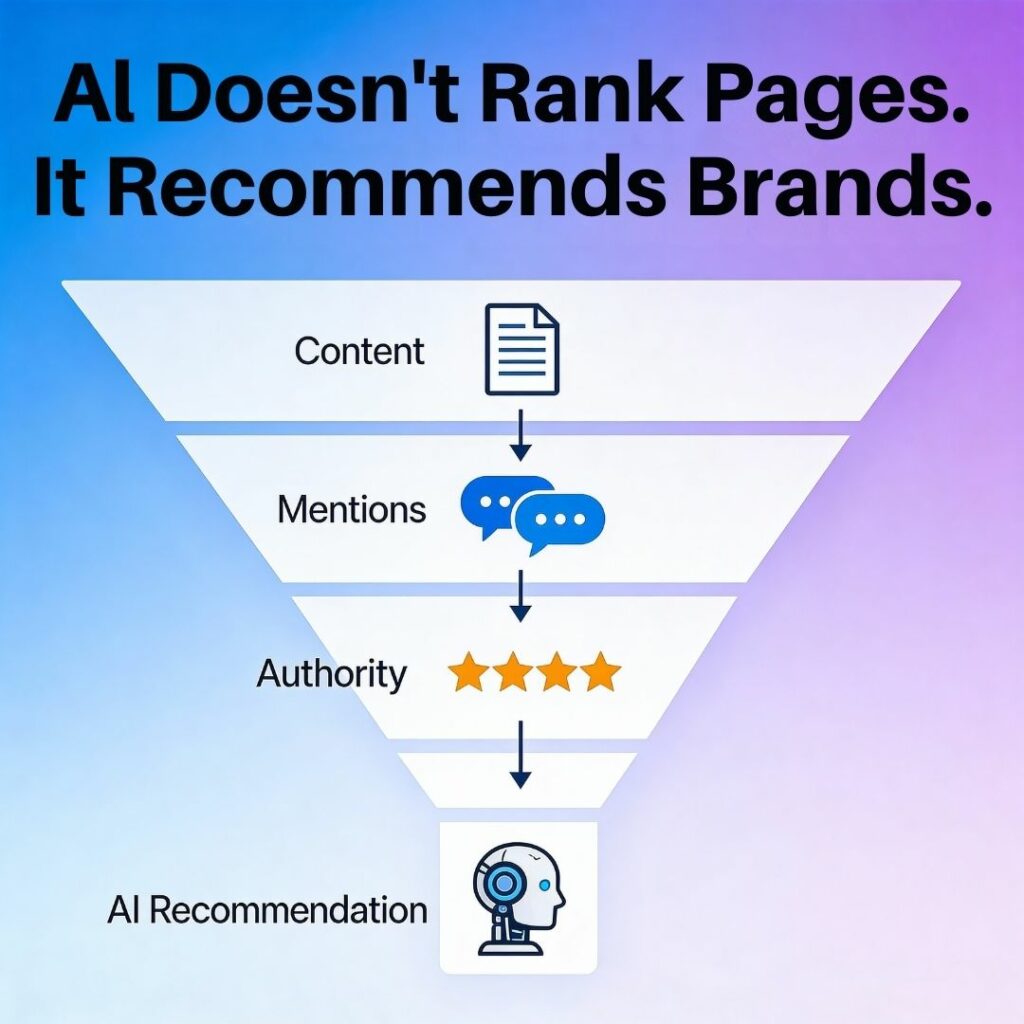
AI tools rely on existing online content. Websites, blogs, reviews, forums, videos, social platforms. If your brand isn’t visible across these places, AI has nothing to reference.
ChatGPT now processes over 2.5 billion prompts per day and has 800 million weekly active users. When these users ask questions, the answers come from somewhere. That somewhere could be your website, assuming you’re optimizing correctly.
SEO now influences what AI understands, which brands AI mentions, and which businesses AI recommends.
What “Search Everywhere Optimization” Really Means
Search Everywhere Optimization is the evolution of SEO.
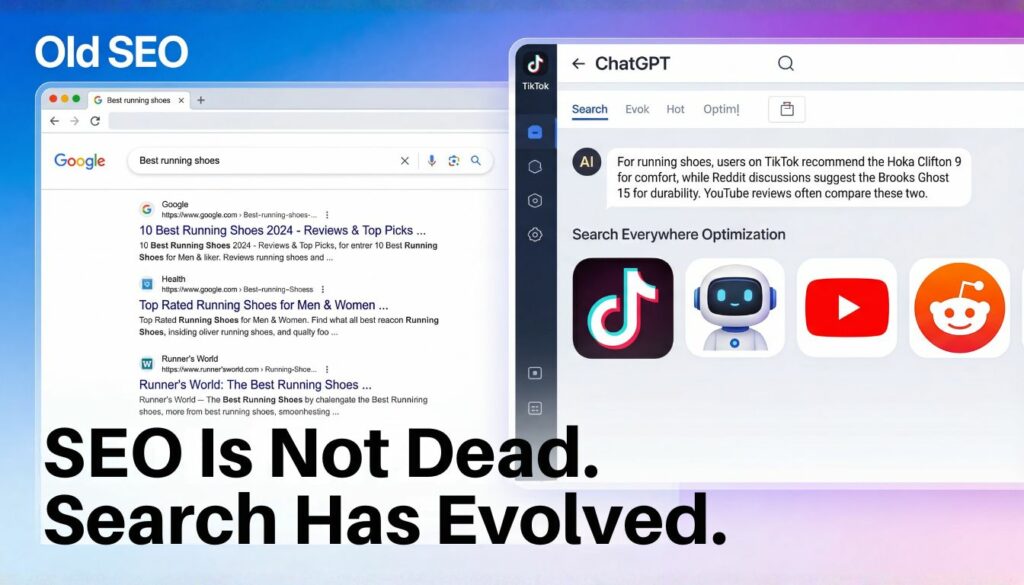
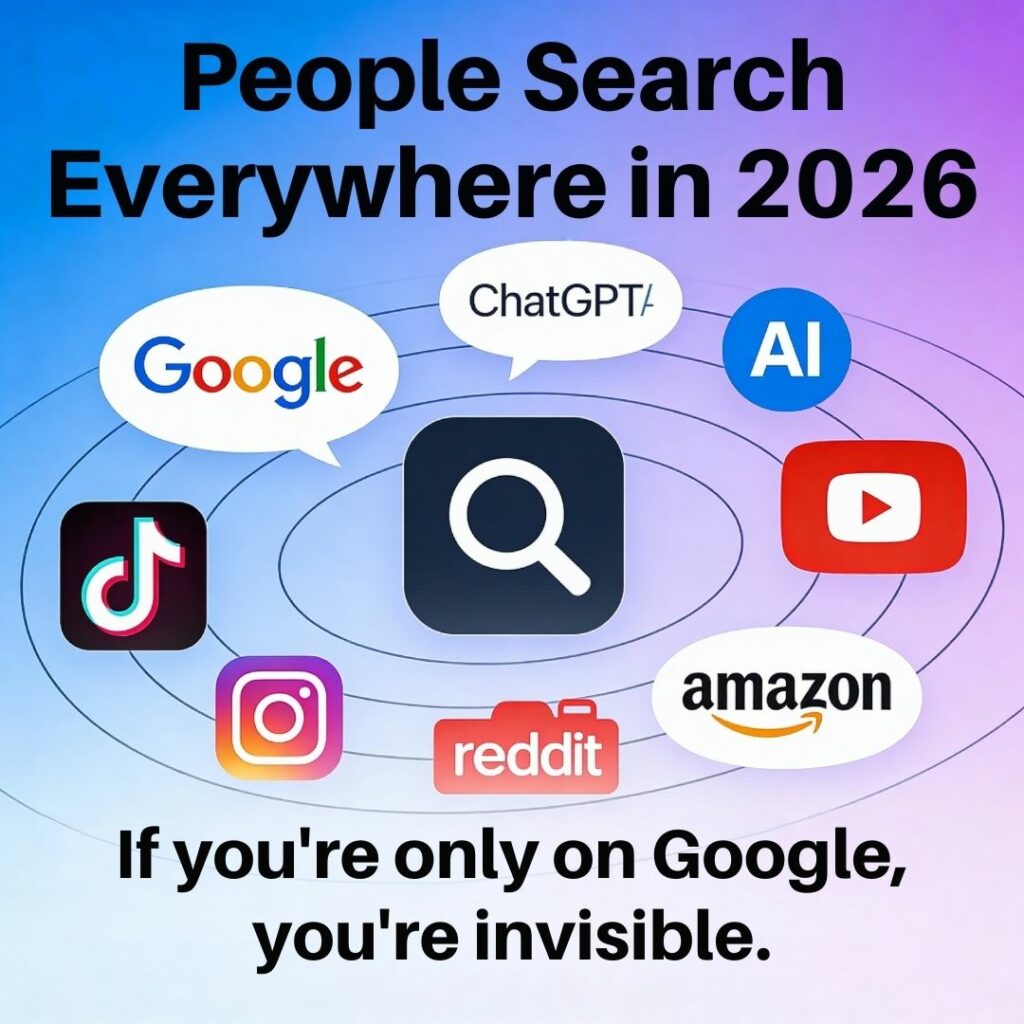
It means optimizing your presence not just for Google, but for search engines, social platforms, video platforms, marketplaces, and AI-powered tools.
In simple terms, if someone searches anywhere, your brand should show up.
This doesn’t mean doing everything at once. It means understanding that SEO is no longer one channel. It’s a visibility strategy.
Where People Search Today (Beyond Google)
Google (Still Important)
Google is still the foundation. Traditional SEO, local SEO, and content optimization still matter.
But Google is no longer the only entry point. And even when people do search on Google, 60% of searches now end without any click thanks to AI Overviews and featured snippets.
ChatGPT and AI Tools
People now ask AI tools questions like “What’s the best tool for X?” or “Who should I hire for Y?” or “Explain this concept simply.”
About 30% of consumer ChatGPT usage is work-related, with users increasingly treating it as a research and decision-making tool. AI responses are influenced by how clearly brands explain themselves online.
YouTube
YouTube has 2.53 billion monthly active users and remains the second most popular search engine after Google. People search for tutorials, reviews, comparisons, and explanations.
If your expertise isn’t visible in video form, you’re missing discovery opportunities.
TikTok and Instagram
Younger audiences search directly on social platforms. Nearly 40% of Gen Z prefers TikTok and Instagram over Google for certain searches, and 74% of Gen Z uses TikTok search.
Short-form content is now part of SEO. Captions, on-screen text, and spoken words all matter.
Reddit and Forums
People trust conversations more than ads. Threads discussing real experiences influence both users and AI models.
Reddit is now the most cited domain by AI tools, appearing in 40.1% of AI-generated responses. That’s more than Wikipedia, YouTube, or Google search results. From August 2024 to June 2025, Reddit was the most cited source across Google AI Overviews, Perplexity, and the second most cited by ChatGPT.
How AI Uses Online Content to Answer Questions
AI systems look for clear explanations, consistent messaging, repeated mentions across platforms, trusted sources, and human-sounding language.
This means your content needs to be understandable, specific, helpful, and consistent.
Thin content, keyword stuffing, and generic pages don’t help anymore. AI is trained on real human conversations (Reddit alone makes up over 40% of the data sources for training large language models), and it prioritizes content that sounds like it came from an actual expert.
What Businesses Must Do Differently Now
SEO in 2026 requires a mindset shift.
Instead of asking “Can we rank for this keyword?” you should ask:
- Can AI clearly understand what we do?
- Can a human explain our offer after reading one page?
- Are we visible outside our website?
- Do people talk about us?
Good SEO now includes educational content, clear positioning, multi-platform presence, and consistent messaging.
Common SEO Mistakes in the AI Era
Many businesses still focus only on Google rankings, ignore video and social search, publish content with no distribution, don’t think about AI visibility, and treat SEO as a one-time task.
These approaches limit visibility in modern search environments.
A telling stat: even on queries without AI Overviews, organic click-through rates fell 41% year-over-year. Users are clicking less everywhere, likely because they’re getting answers from ChatGPT, social platforms, and other channels before they even hit Google.
What This Means for Your Marketing Strategy
SEO should no longer live in isolation.
It should work together with content marketing, social media, video, reviews and reputation, and paid ads.
All of these feed the same ecosystem. One where AI and search engines decide who gets visibility.
The End of the Line? (Not Really)
SEO is not dead. It has evolved.
Today, SEO means being understood, trusted, and recommended across every platform where people search for answers.
Search Everywhere Optimization is the future. Businesses that adapt will stay visible. Those that don’t will slowly disappear from search, AI recommendations, and customer consideration.
Make sense? If not, the team at Digital Time Savers helps businesses navigate the new era of AI-first search. Ready to optimize your visibility across every platform? Let’s talk strategy.