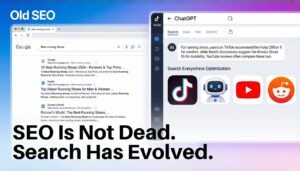


Search is changing faster than most marketing teams can keep up with. Google’s AI Overviews now appear on 30% of desktop searches, and AI Overviews are triggered for around 16% of all queries as of late 2025. ChatGPT’s query volume sits around 20-38 million per day, while Perplexity processed 780 million queries in May 2025 alone, seeing a 524% surge in usage during 2024.
The question every brand is asking right now: if AI is answering user questions directly, why does SEO matter?
Don’t worry! SEO isn’t dying. It’s evolving into something more important than rank positions and traffic volume. Because while AI tools are changing how people search, they still need somewhere to pull their answers from. That somewhere is your website, assuming you’re optimizing correctly.
How AI Search Is Reshaping User Behavior
Let’s look at what’s actually happening in search.
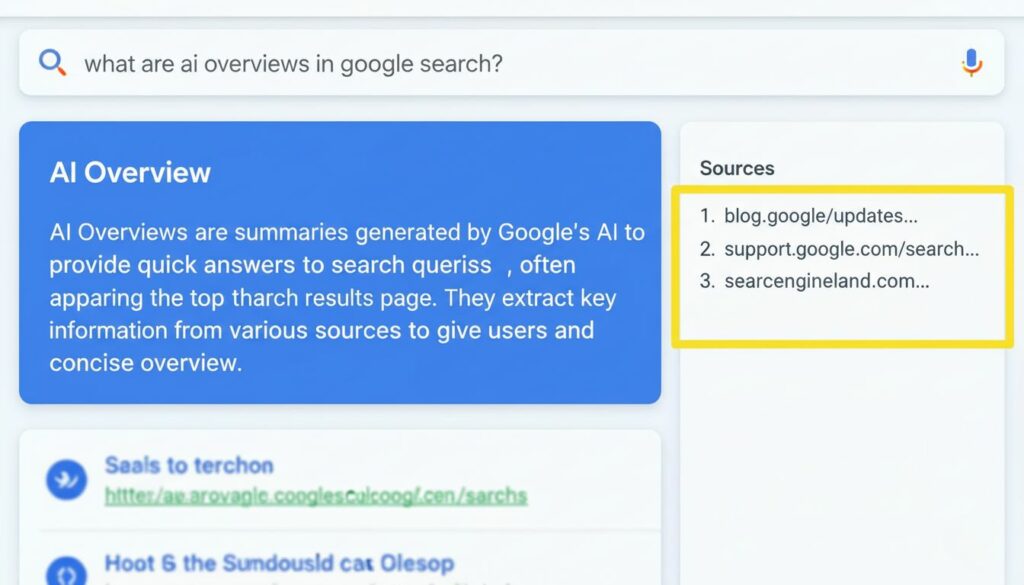
Google’s AI Overviews now appear at the top of search results, synthesizing information from multiple sources and providing direct answers. When these AI summaries show up, organic click-through rates drop significantly. According to recent data from Seer Interactive, organic CTR plummeted from 1.41% to 0.64% for queries with AI Overviews. That’s a 54% decline in clicks, even when you’re ranking first.
Position #2 experienced an even steeper decline, with CTRs falling 39% from 20.83% to 12.60% year-over-year. Across positions 1 through 5, the average CTR decline was 17.92%.
But here’s where it gets interesting, traffic arriving through AI summaries converts at higher rates and carries stronger intent than clicks from traditional blue links.
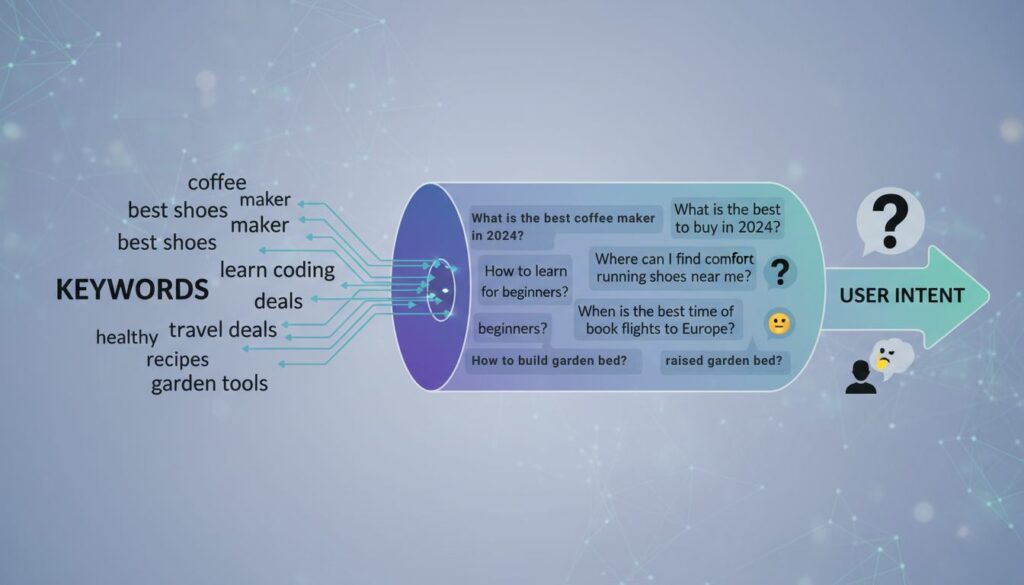
Meanwhile, conversational AI platforms are training users to ask different types of questions. Instead of typing “best hotels Rome,” users now ask ChatGPT or Perplexity: “What’s the best 3-day itinerary in Rome for families with young kids?”
The query itself has changed. Keywords are being replaced by natural language. Users expect contextual, personalized responses. And they’re increasingly getting answers without ever clicking through to a website.
By early 2025, 36% of generative AI users say they have started replacing traditional search with AI assistants for some queries. In specific verticals like programming, an estimated 30% of programming-related searches are now done on ChatGPT as of Q1 2025.
Why SEO Still Drives Revenue
Even with all these changes, SEO remains mission-critical. Here’s why.
AI assistants need data sources. ChatGPT, Perplexity, Google’s AI Overviews – they all pull from indexed websites. Research from Ahrefs reveals that 76% of AI Overview citations come from pages already ranking in Google’s Top 10, with a median organic rank of position 3 for cited URLs.
Think of it this way, AI search didn’t kill SEO. It raised the bar for what counts as optimization.
You’re no longer competing just to rank #1. You’re competing to become the authoritative source that AI platforms cite when answering user queries. That requires a fundamentally different approach.
From Keywords to Search Intent
Old-school SEO focused on exact-match keywords. You’d optimize for “best pizza New York” and call it a day.
AI-powered search understands context. Location. Intent. User preferences. A query like “Where can I find affordable pizza near Times Square after midnight?” gets parsed differently than a generic keyword string.
To stay visible, you need to target search intent, not just search terms.
Informational intent: Users want to learn something. Think “how to” guides, explainers, comparisons.
Transactional intent: Users are ready to buy. Product pages, pricing info, reviews.
Local intent: Users need something nearby. Business listings, neighborhood guides, “near me” content.
Add location context wherever relevant. Instead of generic city-level content, drill down to neighborhoods, landmarks, specific regions. Write in the conversational tone people actually use when asking questions out loud.
The more your content mirrors real user queries, the more likely it is to get surfaced by AI systems.
Structured Data Is Your New Best Friend
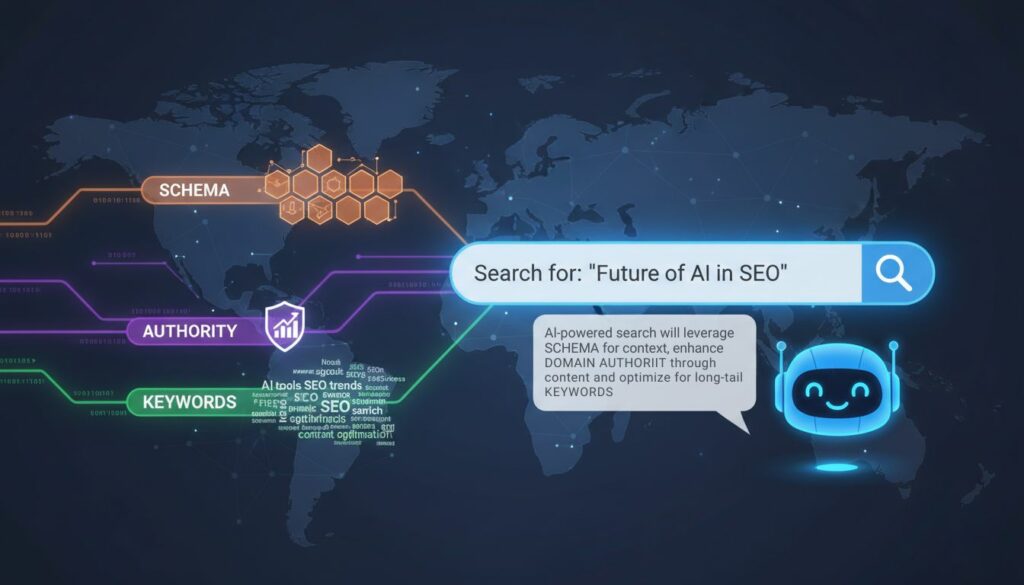
Schema is code you add to your website that tells search engines (and AI platforms) exactly what your content means. It’s the difference between AI understanding that you have a dental practice versus guessing based on context clues.
Research shows that pages with schema markup often see a 40% higher CTR compared to pages without it. That’s massive.
What to implement:
- FAQ schema for question-and-answer content. This is gold for AI Overviews, which love pulling structured Q&A directly into results.
- Product schema for ecommerce – pricing, availability, reviews. AI assistants prioritize this data when users ask shopping-related questions.
- LocalBusiness schema for brick-and-mortar locations. Include your address, hours, services. Voice search and AI tools rely heavily on this for “near me” queries, with 76% of voice searches being local or “near me” searches.
- HowTo schema for step-by-step guides. AI platforms favor clearly structured instructional content.
- Article schema with author credentials, publish dates, and content type. This helps establish authority signals that AI systems look for.
The more structured your content, the easier it is for AI to understand, cite, and recommend it.
E-E-A-T: The Authority Framework That Matters
Google’s E-E-A-T framework (Experience, Expertise, Authoritativeness, Trustworthiness) has become more critical than ever.
Experience means you’ve actually done what you’re writing about. You used the product, visited the location, worked in the field. First-hand knowledge signals quality to AI systems.
Expertise is demonstrable knowledge – credentials, education, track record. Show your work.
Authoritativeness comes from external recognition. Other credible sources cite you, link to you, mention you as a go-to resource.
Trustworthiness is about accuracy, transparency, reliability. Clear authorship, contact information, factual content, secure site infrastructure.
A 2024 Semrush study found that pages with strong E-E-A-T signals saw a 30% higher chance of ranking in the top 3 positions compared to those with weak signals.
For AI-driven search, E-E-A-T matters even more. AI platforms prioritize content that demonstrates these quality characteristics, with strong E-E-A-T being the foundation for visibility in SEO, GEO (AI Overview citations), and LLMO (cross-platform AI mentions).
How to build E-E-A-T:
- Showcase real authors with credentials. Include bylines, author bios, links to LinkedIn profiles or personal websites.
- Cite your sources. Link to data, studies, original research. AI systems favor content that demonstrates where information comes from.
- Earn backlinks from trusted publications. Get featured in industry blogs, news sites, reputable publications. These external signals carry weight.
- Collect and display reviews. User-generated content builds trust. Testimonials, case studies, ratings – all of it helps.
- Keep content fresh. Google now rewards content updates more aggressively, with stale content losing ground to fresher alternatives even if it was once authoritative.
Practical Strategies for Today
Here’s how to actually implement this.
1. Audit your content for conversational structure
Go through your top-performing pages and rewrite headings as natural questions. Instead of “Email Marketing Best Practices,” use “What Are the Best Email Marketing Strategies Today?”
This simple shift makes your content more discoverable by AI systems that favor question-based queries.
2. Implement schema everywhere
Use JSON-LD format (Google’s preferred method) to add structured data to products, FAQs, local business info, and articles. Tools like Google’s Structured Data Markup Helper or Schema.org generators can help.
Validate your schema with Google’s Rich Results Test to catch errors before they impact visibility.
3. Build authority signals systematically
Launch a PR strategy focused on earning mentions from trusted publications. Guest post on industry blogs. Get interviewed for podcasts. Collect customer reviews and testimonials.
These external signals tell AI platforms you’re a credible source worth citing.
4. Optimize for multi-channel AI
Don’t limit your strategy to Google. ChatGPT accounts for around 78% of all AI traffic, Perplexity drives 15% globally, and Gemini holds 6.4%. Strong SEO fundamentals – structured content, clear authorship, authoritative backlinks – benefit you across all platforms.
5. Double down on local SEO with AI context
For local businesses, add neighborhood-specific content, city FAQs, landmark references. Keep your Google Business Profile updated with current hours, services, and photos.
Voice search has gone mainstream, with around 27% of people using voice search on their mobile devices. Voice search and AI assistants rely heavily on local context. Make it easy for them to recommend you.
Measuring Success in the AI Era
Traditional SEO metrics still matter, but you need to expand your measurement framework.
Track these in addition to rankings and traffic:
- Impression share – Are you showing up in AI Overviews and featured snippets? Use Google Search Console to monitor SERP feature appearances.
- Referral traffic from AI platforms – Set up tracking for traffic from perplexity.ai, ai.com, and claude.ai. This traffic often doesn’t show up as organic search but represents AI-driven discovery.
- Branded search volume – When users encounter your brand in AI responses, many perform follow-up branded searches to learn more. Track branded search trends as an indirect indicator of AI visibility.
- Conversion rates by traffic source – AI-referred traffic often converts differently than traditional organic. Segment and analyze to understand quality.
- Citation tracking – Use tools that monitor how often your content gets cited in AI-generated responses, with platforms like SE Ranking now offering ChatGPT visibility tracking.
The Bottom Line
AI search is reshaping things, but SEO remains the foundation for visibility. The brands that structure their content properly, build genuine authority, and optimize for conversational search will capture the majority of AI-driven traffic.
The difference between ranking and being cited is preparation. Start implementing structured data today. Build your E-E-A-T signals consistently. Write content that mirrors how real people ask questions.
And if you need assistance, we help businesses navigate this new era of AI-first search. Ready to optimize your SEO for AI-driven discovery? Let’s talk strategy.
Schedule a consultation to future-proof your search visibility.