

Remember when running Google Ads meant picking some keywords, writing a headline, and watching the leads roll in?
That version of Google Ads doesn’t exist anymore.
If you’ve been running campaigns for more than a year or two, you’ve felt the shift. Clicks cost more. The dashboard looks different every time you log in. Google keeps pushing you toward automation features you didn’t ask for. And that campaign structure that crushed it in 2023? It’s probably bleeding money right now.
Here’s the reality: the average cost per click on Google rose to $5.26 in 2025, a 12.9% jump year-over-year, and 87% of industries saw CPC increases. That’s not a blip. That’s the new normal.
So naturally, a lot of business owners start wondering if Google Ads is even worth it anymore.
Short answer is yes. But only if you understand how the platform actually works now and what it rewards in 2026.

What Changed (And Why It Matters)
Google Ads in 2026 is an AI-first platform. That’s not marketing speak. It’s the operational reality.
In 2025, Google introduced what they call the Power Pack: three campaign types designed to work together. Performance Max handles full-funnel reach across Search, YouTube, Display, Gmail, Maps, and Discover. Demand Gen drives awareness. And AI Max for Search layers AI-powered targeting and creative optimization on top of your existing Search campaigns.
The theme across all of these? Google wants to make more decisions for you.
Keywords aren’t as precise as they used to be. Exact match isn’t truly exact. Phrase match pulls in queries you wouldn’t expect. AI Max uses broad match and keywordless technology to find queries your keyword list would never catch. Your job has shifted from micromanaging bids and match types to feeding the system the right signals so the AI can do its thing.
That’s a big mental shift for a lot of advertisers. And if you resist it, your campaigns will suffer.

The Cost Problem (And What to Do About It)
Let’s talk about the elephant in the room: everything costs more.
CPCs increased for 87% of industries in 2025, with some categories like Beauty and Education seeing jumps of over 40%. The average cost per lead hit $70.11. And one analysis showed a 45% CPC spike in the first half of 2025 alone.
Why? More competition, less click inventory (thanks to AI Overviews eating into organic traffic), and Google’s automated bidding systems that are willing to pay more per click when they predict a conversion.
But here’s what most people miss, 65% of industries also saw improved conversion rates. Clicks cost more, but those clicks are converting better. The advertisers who are winning aren’t necessarily spending less. They’re spending smarter.
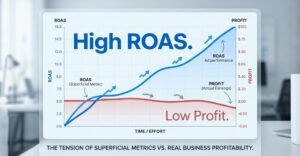
That means obsessing over CPC alone is the wrong game. The right metrics are cost per lead, cost per acquisition, and return on ad spend. A $7 click that turns into a $500 sale is infinitely better than a $2 click that bounces.
AI Overviews Changed the Game
This one caught a lot of advertisers off guard.
Google’s AI Overviews now appear on a significant chunk of search queries, and they’re causing a 34.5% drop in position-one click-through rates when present. People are getting answers directly from the AI summary instead of clicking through to websites.
The flip side? Google expanded ads into AI Overviews in 2025, first on mobile, then desktop. They’re now testing ads inside AI Mode, their conversational search feature that competes directly with ChatGPT.
What this means for you: your ads can now show up inside the AI-generated answer at the top of the page. But you need to be using Google’s automated solutions (like AI Max or Performance Max) to qualify. And your ads need to be relevant not just to the search query, but to the content of the AI Overview itself.
This is a massive shift. Advertisers who figure out how to show up in these AI placements will have a huge advantage over those still optimizing for traditional blue-link search results.

What Works in 2026
Enough about what’s changed. Here’s what’s driving real results right now.
Your conversion tracking has to be airtight. Google’s AI makes bidding decisions based on the data you feed it. If your tracking is broken, you’re training the algorithm on garbage. Set up Enhanced Conversions. If you’re running a lead gen business, connect your CRM data so Google knows which leads actually closed. The advertisers with the cleanest data win because their AI is making smarter decisions.
Performance Max is no longer optional for most businesses. It was easy to dismiss PMax as a black box when it first launched. But Google added channel-level reporting in late 2025, along with negative keywords (up to 10,000), brand exclusions, device targeting, and placement controls. You can now see whether your budget is going to Search, Shopping, YouTube, or Display. That changes the equation entirely. If you’re in e-commerce, PMax should be a core part of your strategy.
AI Max for Search is worth testing. Google’s internal data shows AI Max delivers an average 14% lift in conversions at a similar CPA. For campaigns still running mostly on exact and phrase match, the lift is closer to 27%. That said, independent testing shows more mixed results, with some advertisers reporting neutral or negative outcomes. The key is testing methodically, watching your search terms report closely, and adding negative keywords aggressively. AI Max casts a wider net than you’re used to.
Creative quality matters more than ever. Google’s Asset Studio now lets you generate images and video directly inside the platform. Brand guidelines keep the AI from going off-script with your colors, fonts, and tone. The advertisers who give Google more creative assets to work with (headlines, descriptions, images, videos) get more reach and better performance because the system has more combinations to test.
First-party data is your competitive moat. With third-party cookies fading and privacy regulations tightening, the businesses that own their customer data have a massive advantage. Customer match lists, CRM integrations, and server-side tracking through Tag Gateway all help you target higher-value audiences and give the algorithm better signals to optimize against.
What No Longer Works
Some tactics are officially dead weight in 2026.
Hyper-specific keyword lists with dozens of exact match variations and manual bid adjustments for each one. Google’s AI handles this better than you can now. Your time is better spent on strategy, creative, and data quality.
Running call-only ad campaigns. Google is deprecating call-only ads as of February 2026, with all existing call ads stopping entirely by February 2027. If you rely on phone leads, migrate to responsive search ads with call assets now. Don’t wait.
Ignoring video. YouTube is one of the most powerful advertising surfaces Google offers, and Demand Gen campaigns are growing fast. Short-form video, product demos, and testimonial clips don’t need Hollywood production value. They need to be authentic, clear, and relevant to what your customer is searching for.
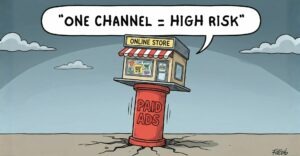
Treating Google Ads as a standalone channel. The businesses seeing the best results in 2026 are the ones that connect their Google Ads strategy to their email marketing, SEO, landing page optimization, and CRM. One channel doesn’t do the heavy lifting alone anymore.

Your Google Ads Game Plan for 2026
If you want profitable results from Google Ads this year, here’s where to focus your energy:
Get your tracking right before you spend another dollar. Enhanced Conversions, server-side tagging, and CRM integration aren’t optional anymore.
Test the Power Pack structure. Run Performance Max for broad reach, AI Max on your Search campaigns for incremental conversions, and Demand Gen for awareness and video.
Feed the algorithm better inputs. More creative assets. Cleaner data. Stronger landing pages. Clear conversion signals.
Watch your search terms report weekly. AI Max and broad match will find new queries, but they’ll also find irrelevant ones. Stay on top of negative keywords.
Measure what matters. Stop fixating on CPC. Track cost per lead, cost per acquisition, and ROAS. That’s where profitability lives.
The Bottom Line
Google Ads in 2026 is more powerful than ever. It’s also more complex, more expensive per click, and more dependent on AI than at any point in its history.
The advertisers who struggle are the ones trying to run 2022 playbooks on a 2026 platform. The ones who win are giving Google’s AI the right inputs, measuring the right outcomes, and staying flexible enough to adapt as the platform keeps evolving.
The opportunity is massive. But it rewards strategy over shortcuts.
The team at Digital Time Savers helps businesses build Google Ads strategies that actually drive profitable results. Ready to stop guessing and start scaling? Let’s talk.