

Retargeting is one of the most powerful tools in digital marketing. It lets you re-engage users who already interacted with your website, products, or ads. Done right, it can dramatically reduce customer acquisition costs and increase conversions.
The numbers back this up. Retargeting ads see conversion rates 150-200% higher than standard display ads, andusers who click retargeting ads are 70% more likely to convert. With stats like that, it’s no wonder retargeting remains a cornerstone strategy for e-commerce and performance marketers.
But there’s a catch. Many businesses are wasting thousands in ad spend by making common retargeting mistakes. When advertising costs are climbing and attention spans are shrinking, you can’t afford to get retargeting wrong.
In this article, we’ll break down 10 of the biggest mistakes brands make with retargeting and more importantly, how you can fix them today. At the end, you’ll also get access to a free downloadable Retargeting Checklist to help you audit your campaigns.
Mistake #1: Targeting Everyone the Same Way
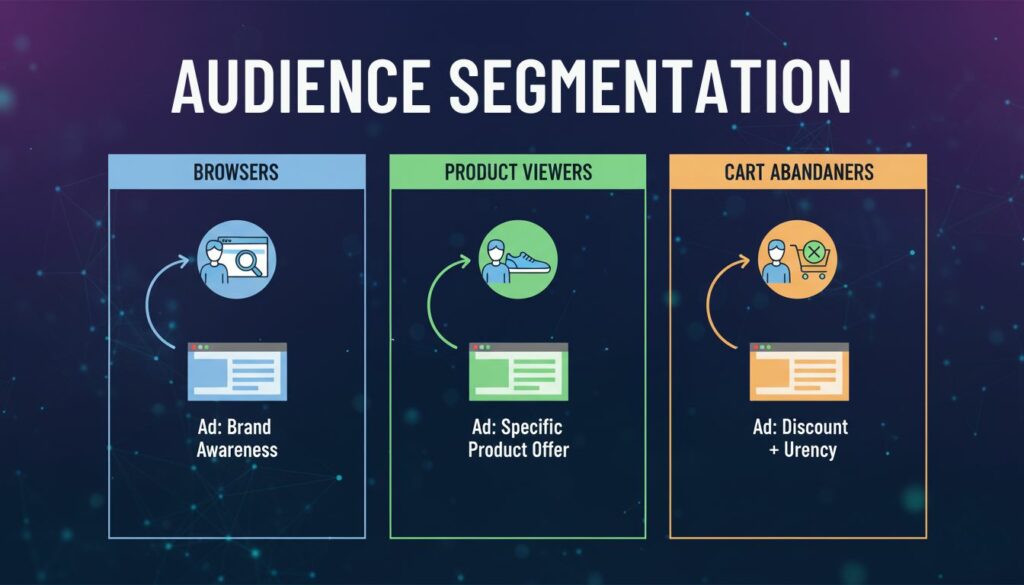
Most brands run one retargeting campaign that treats all visitors equally, whether they bounced in five seconds or abandoned a full cart. That’s like sending the same follow-up email to someone who just met you and someone who’s ready to buy.
The reality is that 98% of website visitors leave without converting, and they all left for different reasons. Someone who viewed your homepage for 10 seconds has completely different intent than someone who spent 15 minutes comparing product specs and adding items to their cart.
Segment your audiences based on behavior. At minimum, create separate retargeting campaigns for site visitors with no product views, product viewers, cart abandoners, and past customers. Tailor your messages to each group. Cart abandoners might need a discount or free shipping offer, while casual browsers need more education about what you actually sell and why it matters.
The more granular you get with segmentation, the more relevant your ads become. And relevance drives performance.
Mistake #2: Over-Frequency and Ad Fatigue
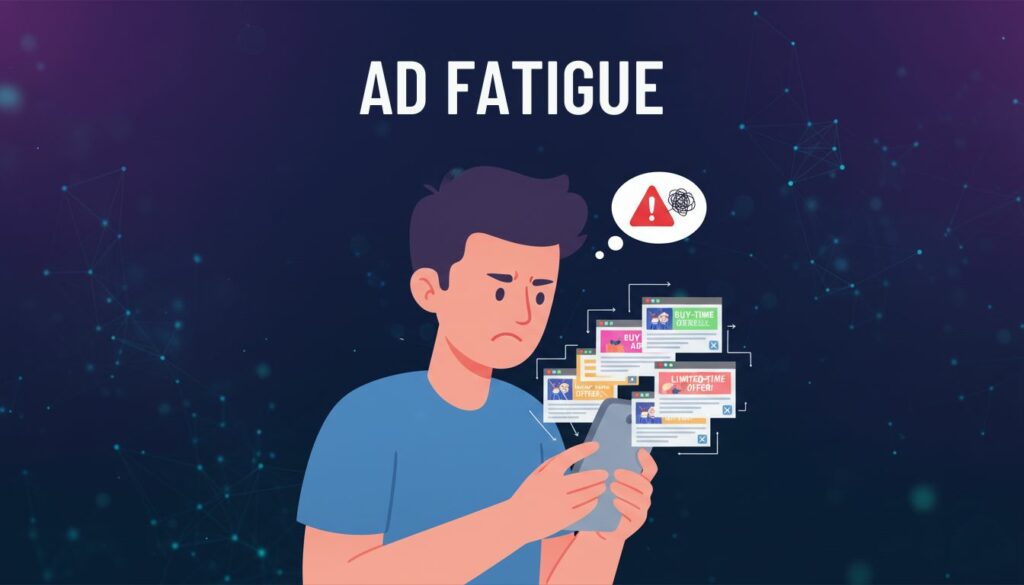
Showing the same ad 20 times in a week is a guaranteed way to annoy customers and tank your campaign performance. Ad fatigue is real, and it’s expensive.
Research shows that ad fatigue leads to a 60% decrease in click probability after the eighth exposure, and after the twelfth contact, the probability of negative brand association increases by 42%. You’re not just wasting ad spend at that point, you’re actively damaging how people perceive your brand.
The fix is straightforward. Use frequency caps to limit how often the same person sees your ads. Industry benchmarks suggest 3-5 impressions per week for B2C campaigns, with lower frequencies for B2B where buying cycles are longer. For retargeting specifically, about 40% of marketers find that 5-10 monthly impressions work best.
Also rotate your ad creatives weekly. Even with a frequency cap, showing the exact same visual and copy gets stale. Diversify formats too, mix carousel ads, video, and static images to keep things fresh.
Mistake #3: Ignoring Exclusions
Too many brands waste money retargeting people who already purchased or who were never qualified leads in the first place. This burns budget and frustrates customers who don’t understand why you’re still advertising to them after they bought.
Always exclude recent converters from your retargeting campaigns. If someone purchased in the last 30 days, they don’t need to see ads pushing them to buy the same thing again. Also exclude unqualified traffic like people who spent five seconds on your site and bounced, employees or internal IPs, and anyone who’s already opted out or unsubscribed.
Smart exclusions ensure your budget goes toward people who might actually convert, not people who already did or never will.
Mistake #4: Weak Creative and Copy
Brands often reuse generic ads for retargeting campaigns. If the message didn’t convert someone the first time they saw it, why would it work now?
Retargeting requires different creative than cold prospecting. You’re talking to someone who already knows you exist, so your message needs to acknowledge that. Create retargeting-specific ads that use urgency (limited-time offers, low stock alerts), show social proof (customer reviews, testimonials, user-generated content), and reference exactly what they viewed.
“Still thinking about these shoes?” with an image of the exact product they browsed is way more effective than a generic “Shop our collection” ad. Personalization matters, and dynamic retargeting ads boost ROI 3-7x compared to static banners.
Mistake #5: No Retargeting Funnel
Retargeting isn’t just one “buy now” ad blasted at everyone who visited your site. Without a funnel, you’re either too aggressive too soon or too vague when someone’s ready to convert.
Build a retargeting funnel that matches where people are in their buying journey. Start with awareness retargeting for people who just discovered you, remind them with helpful content or educational resources. Move to consideration retargeting with testimonials, case studies, or comparison content that builds trust. Finally, hit them with conversion retargeting like discounts, urgency messaging, or bundle offers when they’re close to buying.
The funnel approach respects the customer journey instead of treating everyone like they’re ready to purchase immediately.
Mistake #6: Not Testing Offers
Most brands assume discounts are the only way to win back users, which leads to margin erosion and trains customers to wait for sales before buying.
Test different types of offers to see what actually motivates your audience. Try free shipping, buy-one-get-one deals, limited edition products, or value-adds like free consultations, downloadable guides, or bonus products. Not every customer needs a price cut to convert, some just need a different angle or an extra nudge.
A/B test your offers and let the data tell you what works. You might be surprised.
Mistake #7: Forgetting About Post-Purchase Retargeting
Most retargeting campaigns stop at conversion, which means brands miss huge upsell and retention opportunities with their best customers.
Don’t stop retargeting after someone buys. Retarget recent buyers with cross-sell products that complement what they purchased. Promote loyalty programs or membership tiers. Encourage them to leave reviews or refer friends. These actions drive repeat purchases and increase customer lifetime value.
Acquisition is expensive. Retention is profitable. Post-purchase retargeting keeps customers engaged long after their first transaction.
Mistake #8: Poor Tracking and Attribution
Without proper attribution, you can’t see whether retargeting is actually profitable. This leads to either under-investing in campaigns that work or over-investing in ones that don’t.
Use UTM parameters to track campaign performance properly. Compare last-click attribution (which often over-credits retargeting) with multi-touch attribution models that show the full customer journey. Leverage tools like GA4, Meta Attribution, or third-party platforms to understand how retargeting assists conversions even when it’s not the final click.
Research shows that retargeting assists 30-60% of conversions indirectly, so if you’re only looking at last-click data, you’re missing a big part of the picture.
Mistake #9: Running the Same Retargeting Everywhere
Copy-pasting campaigns across Meta, Google, TikTok, and LinkedIn ignores the reality that users behave differently on each platform and expect different types of content.
Customize creative per platform. Use TikTok for short-form product demos or user-generated content. LinkedIn works better for B2B case studies and thought leadership. Meta is ideal for product-focused ads with discounts or promotions. Google Display excels at dynamic product ads that show exactly what someone viewed.
Platform-specific creative performs better because it matches user expectations and native content formats.
Mistake #10: Stopping Too Soon
Many brands kill retargeting campaigns after one or two weeks if results aren’t instant. But retargeting is about nurturing over time, not immediate conversions.
Allow campaigns to run for at least three to four weeks before making major decisions. Studies show that shorter retargeting windows of 7-14 days outperform longer ones by about 30%, so you want to stay recent and relevant, but you also need enough time to gather meaningful data.
When optimizing, adjust segmentation and creative instead of just pausing campaigns. And track assisted conversions, not just last-click attribution, to see the full impact of your retargeting efforts.
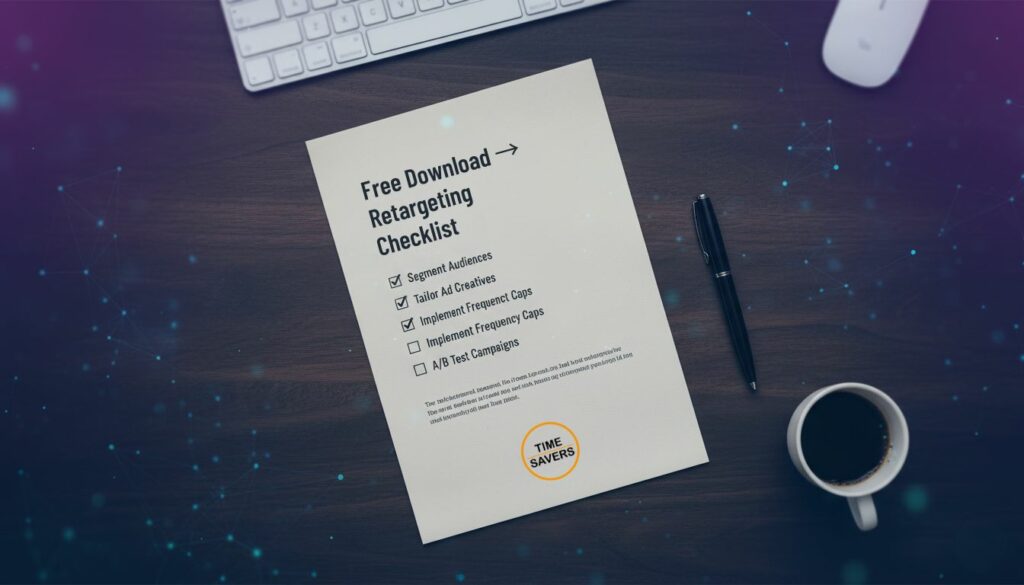
Free Download: Retargeting Checklist
To help you avoid these mistakes, we’ve created a free one-page Retargeting Checklist. It covers must-have audience segments, exclusion rules, frequency cap recommendations, creative ideas, offer testing frameworks, and attribution setup basics.
👉 [Download the Retargeting Checklist here]
Use it as a quick audit tool before launching your next campaign.
Conclusion
Retargeting remains one of the highest-ROI digital strategies, but only when it’s done correctly. With the average retargeting ROI hitting 4.2x across platforms and conversion rates averaging 7.5% in 2025, the potential is massive.
Avoiding these 10 mistakes can save thousands in wasted ad spend and turn casual visitors into loyal customers. Today, brands that master segmentation, personalization, and creative testing will see the greatest success.
We help businesses build smart retargeting funnels that boost conversions and customer lifetime value.
👉 Ready to optimize your retargeting strategy? Contact us today and let’s make every impression count.